
 By Sandeep Saxena
By Editorial Desk, GadgetXprt.com
Published: October 20, 2026
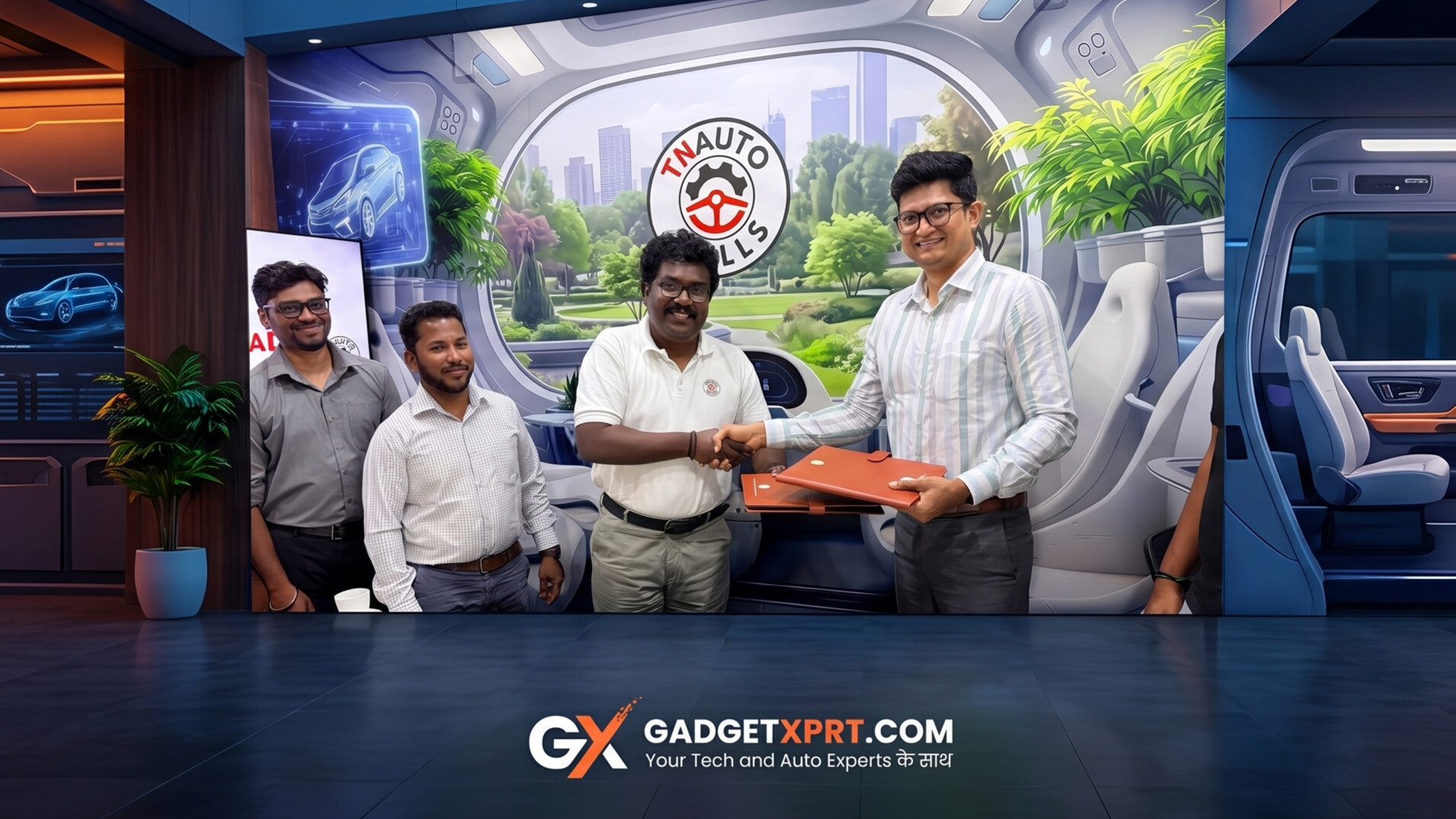
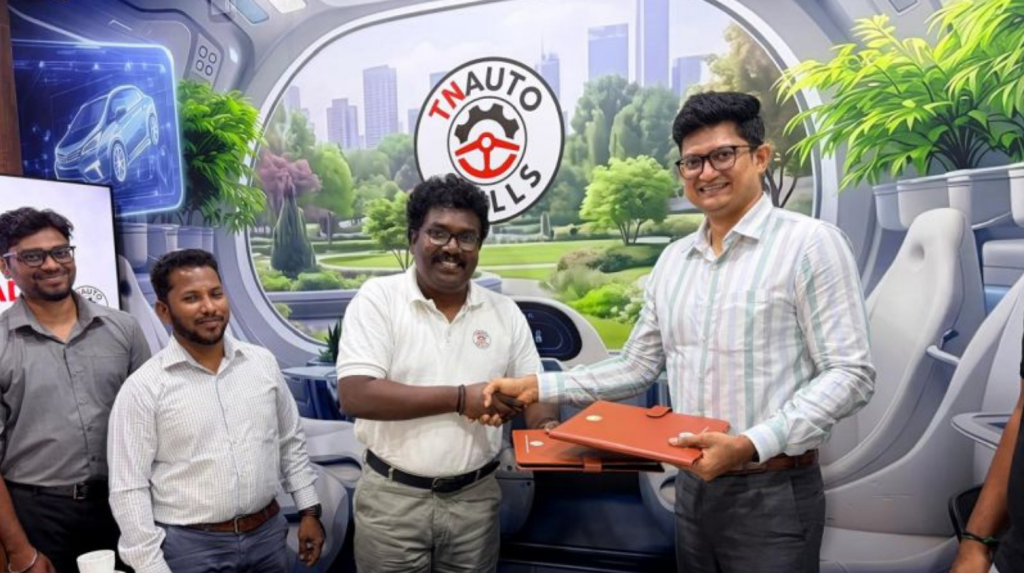
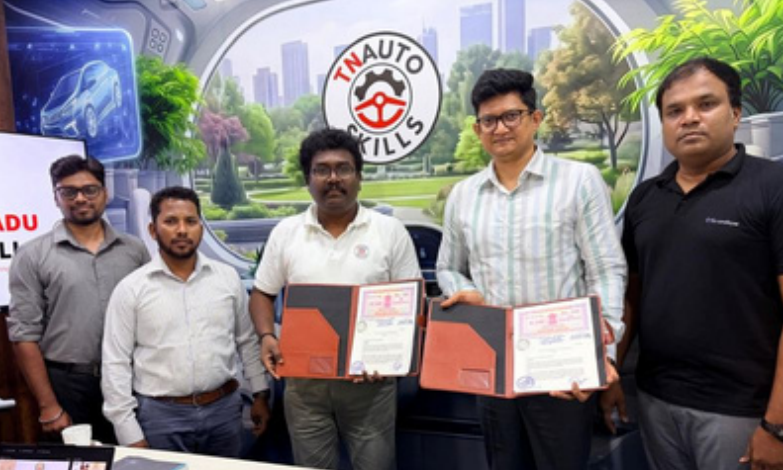
The automotive industry is in the midst of an unprecedented technological transition where software, intelligent workflows, and artificial intelligence are redefining how vehicles are engineered, manufactured, and maintained. Recognizing the critical need to align intelligent shop-floor operations with a digitally skilled talent pool, the TN AutoSkills O2V MoU has officially been formalized between TN AutoSkills and O2V Private Limited.
Under the progressive charter of the TN AutoSkills O2V MoU, both organizations will embed AI-powered hyperautomation solutions directly into automotive vocational training and industrial manufacturing lines. By connecting emerging intelligent technologies with frontline workforce execution, this initiative ensures that India’s automotive manufacturing backbone remains resilient, agile, and globally competitive.
1. Core Structure of the TN AutoSkills O2V MoU
The operational framework established under the TN AutoSkills O2V MoU is organized across the foundational parameters outlined in the table below:
| Collaboration Parameter | Operational Details |
| Partner Entities |
TN AutoSkills & O2V Private Limited |
| Agreement Name |
TN AutoSkills O2V MoU |
| Primary Domain |
AI-Powered Hyperautomation & Automotive Skilling |
| Core Directive |
Connecting Enterprise AI Innovation with Real-World Workforce Capabilities |
| Target Talent Pool |
Automotive Technicians, Polytechnic Engineers, and Factory Operators |
| Industry Significance |
Accelerating Industry 4.0 Adoption Across Automotive Suppliers & SMEs |
| Editorial Inception |
Formalized under the TN AutoSkills Ecosystem Expansion Review |
2. Bridging Advanced Technology with Factory Execution
Digital transformation within modern automotive manufacturing corridors often encounters a persistent structural bottleneck: while advanced enterprise automation platforms and cognitive algorithms exist, the specialized technical talent required to deploy, fine-tune, and supervise these systems remains scarce across regional facilities.
The direct execution of the TN AutoSkills O2V MoU addresses this operational divide with a practical skilling framework. By uniting O2V’s technical capabilities in AI-powered hyperautomation with the extensive industrial training infrastructure of TN AutoSkills, the partnership establishes a scalable roadmap for industrial units to adopt smart factory tools without workflow disruptions.
“Technology creates possibilities. Skilled people turn those possibilities into impact.”
— TN AutoSkills Collaboration Charter
3. Four Strategic Pillars of the TN AutoSkills O2V MoU
The comprehensive roadmap defined under the TN AutoSkills O2V MoU focuses on four vital operational areas designed to drive measurable shop-floor transformation:
-
Shop-Floor Hyperautomation Deployment: Implementing automated computer-vision quality checks, predictive inventory management, and automated decision pipelines directly on active automotive assembly lines.
-
Frontline Workforce Digital Literacy: Training traditional mechanical mechanics and polytechnic diploma holders to comfortably supervise, troubleshoot, and interface with modern automated software stacks.
-
Demystifying AI for Small Enterprises: Assisting small and medium auto-component manufacturers (SMEs) in adopting modular, cost-effective automation toolkits without requiring crippling capital investments.
-
Curriculum Modernization: Updating vocational learning modules to reflect modern software-defined vehicles, sensor integration, and intelligent robotics rather than outdated mechanical-only workflows.
4. Strengthening Tamil Nadu’s Manufacturing Dominance
As Tamil Nadu consolidates its position as India’s leading automotive corridor—driving production across conventional internal combustion engines, electric mobility (EVs), and software-defined platforms—the demand for interdisciplinary technical talent is rising at an exponential rate.
Through targeted vocational initiatives like the TN AutoSkills O2V MoU, the regional manufacturing ecosystem ensures that intelligent automation elevates industrial operators rather than displacing them. Equipping technicians with automation literacy ensures long-term industrial resilience and higher-value job creation across the state’s automotive belts.
For broader national standards on automotive workforce skilling and industry certifications, refer to the Automotive Skills Development Council (ASDC) Portal.
GadgetXprt Verdict
The TN AutoSkills O2V MoU sets a clear precedent for how regional manufacturing ecosystems must evolve in the age of intelligent mobility. By treating human capital and AI hyperautomation as complementary assets rather than competing forces, this collaboration ensures India’s automotive workforce remains digitally agile, highly skilled, and prepared for the next era of industrial transformation.
For technical analysis on automotive software, software-defined mobility, and industrial engineering trends, follow GadgetXprt.com.