
 By Sandeep Saxena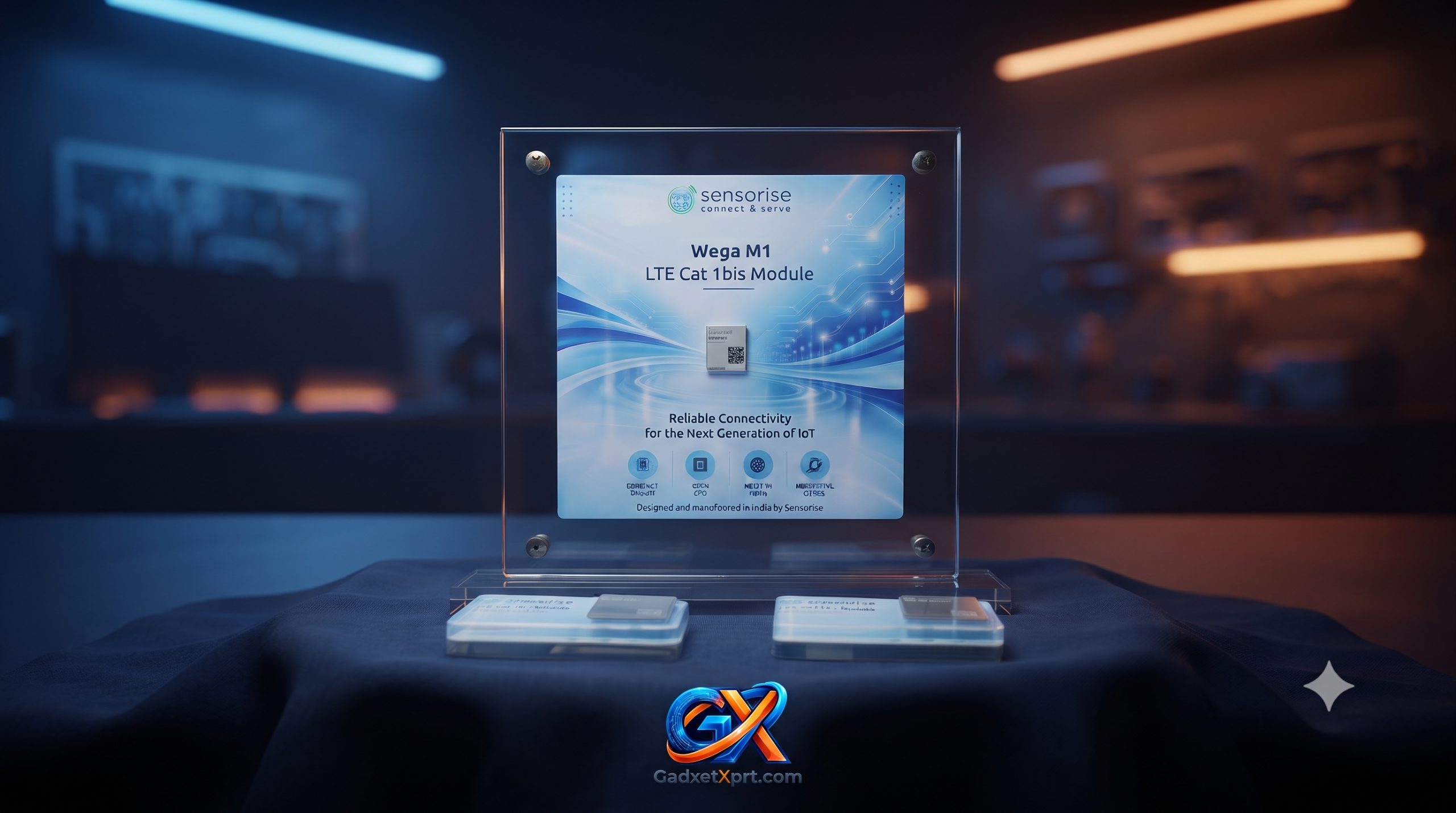
The Sensorise Wega M1 GSM Module Launch officially took place at India Mobile Congress (IMC) 2026 in New Delhi, marking a historic turning point for indigenous telecommunications and Machine-to-Machine (M2M) hardware. Unveiled by the Union Minister for Communications, Shri Jyotiraditya Scindia, the platform serves as an authentic national bridge—a “SETU”—between connected field devices and telecom networks. Backed by key central initiatives around Make in India, domestic electronic manufacturing, and critical data sovereignty, the Sensorise Wega M1 GSM Module Launch addresses growing market demands for fully compliant, Indian-developed cellular communication components.
In an Internet of Things (IoT) landscape traditionally dominated by foreign chipsets, this breakthrough provides domestic device makers with a reliable alternative built specifically for Indian operational environments and regulatory standards.
What is Wega M1 GSM Module and Its Core Architectural Features?
Designed, engineered, and manufactured entirely within India, the hardware platform aims to replace reliance on imported communication modules across critical utilities and enterprise infrastructure. The technological backbone of the Sensorise Wega M1 GSM Module Launch is anchored by the globally recognized Qualcomm® 216 LTE IoT Modem, delivering reliable, power-efficient cellular throughput across diverse operating frequencies.
To ensure frictionless adoption by Original Equipment Manufacturers (OEMs), Original Design Manufacturers (ODMs), and system integrators, the module incorporates key technical capabilities:
-
Qualcomm 216 LTE Modem Integration: Optimized for low-power operation, ensuring connected edge devices operate reliably over long deployment windows without thermal throttling.
-
Pin-Compatible Footprint: Built with an industry-standard hardware layout that simplifies OEM migration, eliminating expensive motherboard redesigns or tooling delays.
-
eSIM and Remote SIM Provisioning (RSP): Fully GSMA-compliant remote provisioning enables seamless over-the-air carrier profile management without needing physical SIM card swaps in the field.
-
Multi-Operator / Multi-IMSI Redundancy: Delivers carrier failover capability, ensuring machines automatically switch to alternate telecom networks during localized network outages.
-
Extended 10 to 15-Year Operating Lifecycle: Built with industrial-grade resilience tailored for utility rollouts where replacing hardware frequently is economically impossible.
-
QoSIM Analytics & Regulatory Compliance: Built-in connection analytics conforming strictly to Department of Telecommunications (DoT), MTCTE/TEC, and national cybersecurity guidelines.
How It Transforms Electric Vehicles (EVs) and Smart Meters
The proliferation of real-time machine connectivity hinges on network uptime and environmental durability. The strategic rollout following the Sensorise Wega M1 GSM Module Launch directly empowers India’s most critical high-growth industries:
-
Smart Metering Infrastructure (AMI): Under the central government’s Revamped Distribution Sector Scheme (RDSS), millions of smart electricity meters are being installed nationwide. The Wega M1 module delivers tamper-resistant, two-way cellular communication essential for automated billing, load balancing, and real-time power theft monitoring over a 15-year lifecycle.
-
Electric Vehicles (EVs) and Connected Telematics: Modern electric scooters, three-wheelers, and commercial fleets rely on constant connectivity for Telematics Control Units (TCU), Battery Management Systems (BMS), predictive maintenance, and remote immobilization. The Wega M1 handles severe vehicle vibrations and Indian ambient temperatures with zero signal drop.
-
Point of Sale (POS) Terminals & Logistics: Cold-chain asset tracking and digital retail payment terminals benefit from automatic network failovers, eliminating failed transactions in patchy network areas.
Strengthening ‘Make in India’ and National Data Sovereignty
In recent times, recurring security incidents and backdoor firmware vulnerabilities in imported cellular modules have highlighted major national vulnerabilities. When critical assets like power grids and transportation systems depend on foreign-coded hardware, critical telemetry data faces serious interception risks.
As highlighted by Karn Nagpal, President of Sensorise, developing a home-grown module was an essential countermeasure to protect Indian infrastructure. By complying fully with DoT guidelines on local SIM personalization and domestic network architecture, the Sensorise Wega M1 GSM Module Launch establishes a trusted end-to-end chain of custody. It ensures that critical machine data remains strictly within national sovereign boundaries, accelerating the government’s target of deploying over 1 billion secure, connected IoT devices across the country.
Rollout Timeline and Industry Impact
Sensorise has confirmed that commercial mass-market deployment following the Sensorise Wega M1 GSM Module Launch will commence in the first quarter of 2027 (Q1 2027), supported by preliminary pilot rollouts with key anchor enterprise clients and national utility partners.
In conclusion, this launch marks a mature transition for Indian high-tech manufacturing. By uniting Qualcomm’s power-efficient silicon modem with indigenous design and security protocols, India is taking decisive control over its hardware connectivity backbone.
Official References:
Explore more about the underlying modem architecture on the Qualcomm Official Portal and track upcoming enterprise rollouts via Sensorise Smart Solutions.
For real-time coverage on semiconductor breakthroughs, IoT innovation, and automotive telematics, stay connected with GadgetXprt.com.