
 By Sandeep Saxena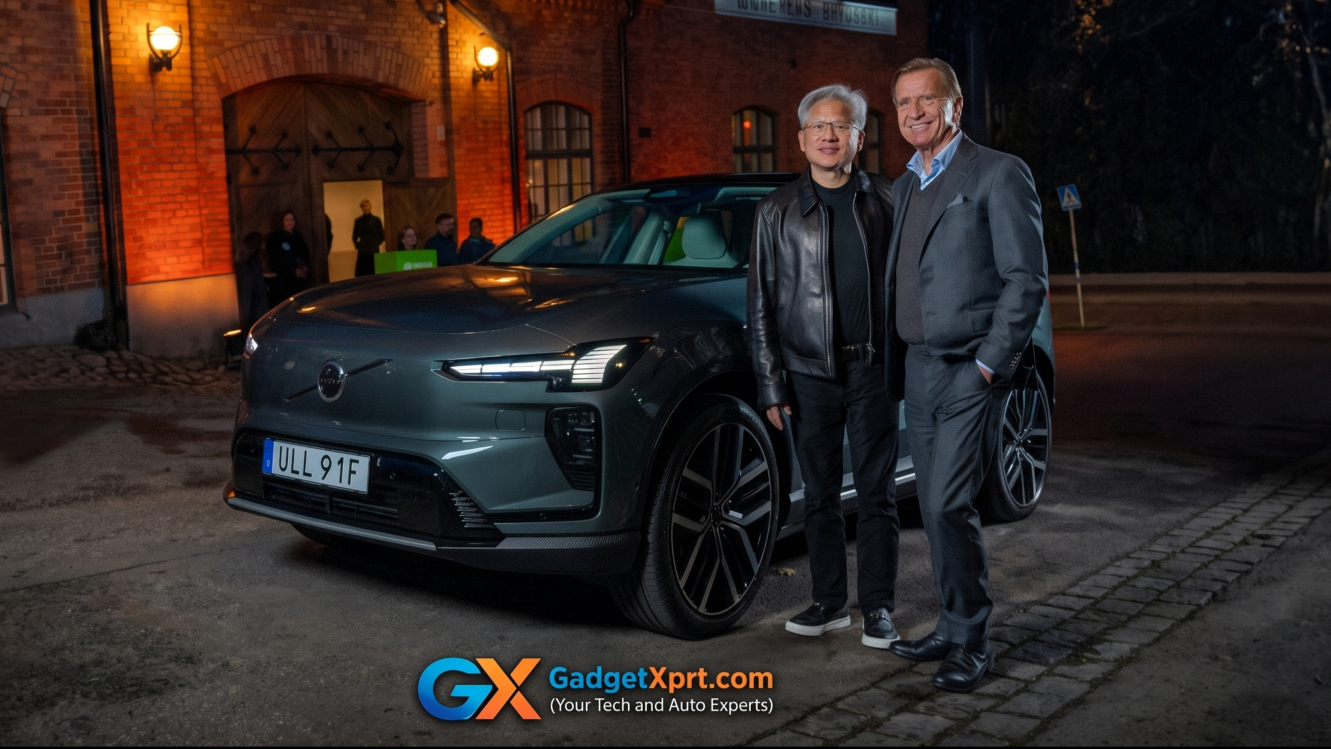
Volvo Cars has officially announced an expanded multi-year partnership with chip-maker NVIDIA to integrate advanced artificial intelligence directly into the central computing architecture of its next-generation vehicles. Anchored by the Volvo NVIDIA AI automated driving initiative, this collaboration unites Volvo’s century-long automotive safety research with NVIDIA’s accelerated computing stacks, targeting end-to-end autonomous navigation from urban city streets to high-speed highways.
While announced on an international scale, the technological foundation carries critical significance for the Indian luxury automotive segment. As Volvo Auto India accelerates its local electric vehicle pipeline with models built on software-defined architectures, the rollout of centralized AI processing will redefine predictive collision avoidance, Level 2+ advanced driver assistance systems (ADAS), and urban driving safeguards tailored for dense traffic environments like India.

1. NVIDIA Hyperion Architecture: Centralized High-Performance Computing
At the heart of the Volvo NVIDIA AI automated driving roadmap is the deployment of the NVIDIA Hyperion sensor and compute platform. Traditional vehicles rely on fragmented electronic control units (ECUs) scattered across the chassis to handle separate tasks such as braking, lane-keeping, and infotainment.
Under this expanded integration, future Volvo electric vehicles will consolidate all real-time sensory inputs into a high-performance central AI brain. The architecture executes trillions of operations per second, fusing data simultaneously from:
-
High-Definition Cameras: Providing 360-degree optical coverage to classify pedestrians, two-wheelers, and lane markings.
-
Solid-State LiDAR Arrays: Delivering millimeter-accurate 3D point-cloud mapping regardless of external darkness or severe fog.
-
Radar and Ultrasonic Arrays: Monitoring immediate perimeter proximity to manage low-speed maneuvering and parking navigation.
2. Halos OS and Alpamayo Stack: Moving Toward Eyes-Off Driving
The software backbone driving the Volvo NVIDIA AI automated driving ecosystem relies on two core pillars: NVIDIA Halos OS and the Alpamayo Stack autonomous driving software. Designed with strict automotive functional safety standards, Halos OS provides the certified operating environment necessary to run neural networks in safety-critical vehicle dynamics.
Together, these software frameworks enable a phased rollout of hands-off, eyes-off, and mind-off automated travel on mapped highways. By constantly training neural models against diverse real-world edge cases, the system ensures that decisions made by the autonomous agent mimic or exceed the reaction times of attentive human drivers.
[यहाँ दूसरी इमेज लगाएं:]

3. What the AI Partnership Means for India and Local Road Safety
While fully unsupervised autonomous driving faces infrastructure and regulatory delays across emerging markets, the Volvo NVIDIA AI automated driving breakthroughs provide immediate safety advantages for Indian driving conditions:
-
Predictive Collision Shield for Indian Traffic: The high-compute Hyperion platform excels at tracking erratic traffic behaviors, such as sudden lane merges by two-wheelers, jaywalking pedestrians, and unmarked obstacles, deploying proactive emergency braking far earlier than legacy systems.
-
Next-Gen Luxury EV Pipeline: Volvo India currently sells locally assembled luxury EVs such as the XC40 Recharge, C40 Recharge, and flagship models. Upcoming luxury entries like the EX90 and EX60 will carry this centralized NVIDIA compute hardware natively.
-
Over-The-Air (OTA) Intelligence Upgrades: Because the compute headroom is over-engineered from the factory, vehicles delivered to Indian customers will continuously gain improved driving assistance features and localized algorithmic refinements via software updates without hardware replacements.
4. Technical Architecture and AI Systems Breakdown
The mechanical, processing, and software attributes established under the Volvo NVIDIA AI automated driving partnership are organized in the structured overview below:
| Feature / Architecture Layer | Technical Specification & Capability |
| Central Compute Platform | NVIDIA DRIVE Hyperion Sensor & Compute Architecture |
| Operating System | NVIDIA Halos Automotive Safety OS |
| Driving Software Suite | Alpamayo Stack Deep-Learning Autonomous Suite |
| Primary Safety Sensors | Roof-Mounted LiDAR, 360-Degree Optical Cameras, Multi-Mode Radars |
| Driving Autonomy Target | Door-to-Door Automated Driving (City Streets, Highways & Automated Parking) |
| Human Interface Mode | Progressive Transition from Supervised ADAS to Unsupervised Eyes-Off Travel |
| Vehicle Architecture Integration | Next-Generation Software-Defined Electric Platform (SPA3 / EX-Series) |
| India Market Impact | Enhanced Predictive Crash Prevention & High-Density Traffic Collision Shields |
| Commercial Debut | Scheduled with Volvo’s Upcoming Next-Generation Global EV Rollout |
5. Strategic Industry Context and CEO Perspectives
The alliance between Volvo Cars and NVIDIA dates back to 2017, but this latest expansion formalizes Volvo’s shift from a traditional car manufacturer into a fully realized software-defined vehicle brand.
According to Håkan Samuelsson, President and CEO of Volvo Cars, bringing together a century of human-centric safety research with world-class artificial intelligence creates an unprecedented platform for passenger protection. Jensen Huang, Founder and CEO of NVIDIA, highlighted that accelerated computing has transformed the automobile into an intelligent, context-aware machine capable of understanding its surroundings.
For technical telemetry breakdowns, automotive software evaluations, and electric vehicle safety deep-dives, follow GadgetXprt.com.