
 By Sandeep Saxena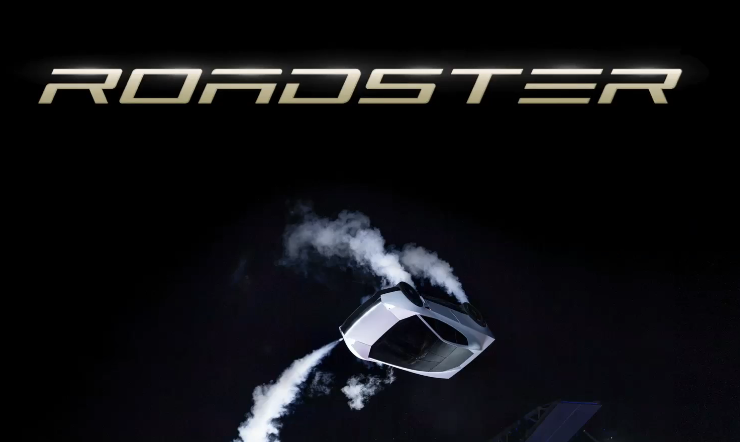
The New Tesla Roadster launch demonstration has set a dramatic new engineering benchmark in the electric hypercar landscape. Streamed live from the SpaceX testing grounds in McGregor, Texas, Tesla CEO Elon Musk unveiled the re-engineered all-electric supercar performing unprecedented aerial maneuvers, driven by integrated cold-gas rocket thruster technology co-developed with SpaceX.
Following nearly a decade in conceptual development, the New Tesla Roadster launch event confirmed an astonishing 0 to 60 mph (0 to 96 km/h) acceleration time of just 0.81 seconds in its production-intent thrust configuration, alongside a targeted commercial manufacturing timeline slated for 2028.
1. SpaceX Cold-Gas Thrusters: How the Flight Demonstration Worked
The central highlight of the New Tesla Roadster launch was a live demonstration where the vehicle drove up an inverted, angled ramp before engaging high-pressure propulsion nozzles. As pressurized gas expelled from dedicated thruster ports, the car became airborne, executed a stabilized mid-air roll, and completed a controlled four-wheel landing.
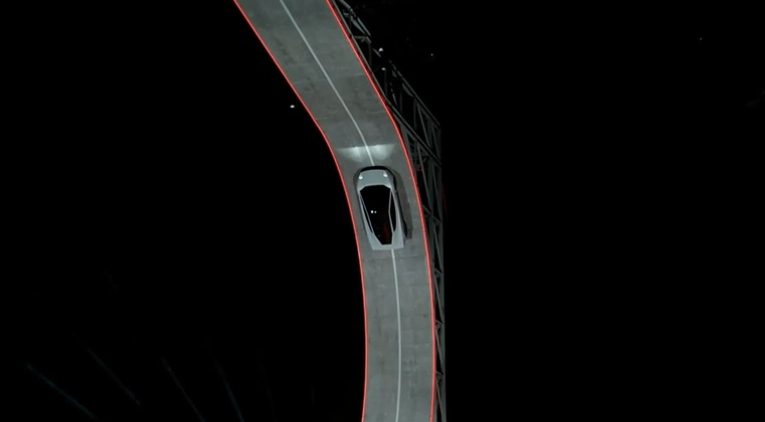
Rather than acting as a traditional sustained-flight aircraft, the engineering package utilizes ultra-high-pressure cold-gas air thrusters fed by Carbon-Overwrapped Pressure Vessels (COPVs). These nozzles provide multi-directional bursts of thrust that serve two critical purposes:
-
Massive Ground Suction: Delivering intense downward aerodynamic thrust to eliminate wheel spin and achieve cornering grip previously impossible on street tires.
-
Dynamic Aerial Hops: Providing short, controlled aerial liftoff and stabilization bursts for extreme obstacle clearance.
2. Unprecedented Acceleration: 0 to 60 mph in 0.81 Seconds
The mechanical powertrain combined with cold-gas propulsion during the New Tesla Roadster launch shatters existing automotive acceleration records. While conventional hypercars are limited by the physical traction limits of rubber against asphalt, the downward-firing and rearward-firing thrusters bypass mechanical grip limitations entirely.
Tesla confirmed that standard performance configurations reach 60 mph in approximately 1.6 seconds, while the SpaceX-assisted Thrust package achieves 0-60 mph in 0.81 seconds. An extreme single-seater lightweight configuration was referenced achieving 60 mph in 0.59 seconds. Top speeds are projected to exceed 230 mph (370 km/h) with aerodynamic active-vacuum ground effects.
3. Aerospace Metallurgy and Lightweight Chassis Design
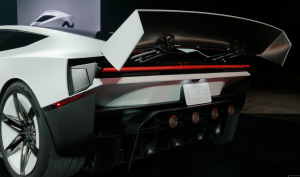
To offset the mass of high-capacity battery modules and onboard high-pressure air reservoirs, the New Tesla Roadster launch detailed extensive use of aerospace-grade materials. The chassis structure integrates a composite monocoque constructed from:
-
Carbon Fiber Composite Panels: Reducing overall curb mass while maintaining high torsional rigidity.
-
Titanium and Magnesium Castings: Deployed across suspension mounting points and motor subframes to handle extreme g-forces generated during instantaneous sub-second acceleration runs.
The internal packaging omits traditional rear seating in thruster-equipped variants to accommodate high-pressure air compression systems, which recharge utilizing onboard compressors during steady-state cruising and regenerative braking cycles.
4. Variant Configuration & Performance Breakdown
The vehicle specifications detailed during the New Tesla Roadster launch showcase are summarized in the structured comparison below:
| Parameter / Feature | Performance Trim | Thrust (SpaceX Package) | Rocket Architecture (Track Demo) |
| Powertrain Layout | Tri-Motor Electric AWD | Tri-Motor AWD + Cold-Gas Nozzles | Electric AWD + 10 SpaceX Thrusters |
| 0-60 mph (0-96 km/h) | 1.6 Seconds | 0.81 Seconds | 0.59 Seconds (Targeted) |
| Top Track Speed | >200 mph (320 km/h) | >230 mph (370 km/h) | High-Mach Boundary Targets |
| Seating Configuration | 2+2 Coupe Architecture | 2-Seater (Rear Tank Layout) | Single-Seater Lightweight Layout |
| Chassis Materials | Carbon Fiber & Aluminum | Carbon-Titanium-Magnesium | Full Aerospace Composite |
| Active Downforce | Rear Active Diffuser & Wing | Downward Pneumatic Jets | Full 360-Degree Thrust Control |
| Target Production | 2028 | 2028 | Prototype / Validation Testing |
5. Road Legality, Production Roadmap, and Industry Impact
While the New Tesla Roadster launch demonstration proved the physical feasibility of pneumatic thrusters on road vehicles, substantial regulatory hurdles remain regarding street-legal certification in global jurisdictions. Consumer road-going iterations are expected to strictly regulate thruster actuation through geo-fencing, restricting high-pressure deployments to closed circuits and approved airstrips.
Tesla reiterated that customer deliveries and full-scale series assembly are scheduled to begin in 2028, with reservations remaining open across the brand’s international portals.
Prospective buyers and automotive enthusiasts can track development timelines directly through the Official Tesla Roadster Portal.
For technical telemetry analysis, electric drivetrain breakdowns, and emerging automotive innovations, follow GadgetXprt.com.